On this page
Quick answer
Peppermint is one of the few herbal remedies recommended in gastroenterology guidelines, but the evidence is for enteric-coated peppermint oil capsules in people with irritable bowel syndrome (IBS). These capsules can reduce abdominal pain and overall IBS symptoms.
Peppermint tea contains much less of the active oil. It is a pleasant, caffeine-free drink that many people find settling after meals, but there is little direct research on it. Peppermint in any form can make heartburn worse, so it is not a good choice if reflux is your main problem.
How peppermint works on the gut
The main active ingredient in peppermint oil is menthol. It blocks calcium channels in the smooth muscle of the intestine, which helps the gut wall relax. That can ease cramping, spasm and pain. Peppermint may also reduce the sensitivity of pain nerves in the gut and has mild effects on gut bacteria.
The same relaxing effect is the downside: peppermint can also relax the valve (lower oesophageal sphincter) between the stomach and food pipe, allowing acid to rise and cause heartburn.
What the research says
Peppermint oil for IBS
IBS causes recurring abdominal pain with diarrhoea, constipation or both. Several meta-analyses of randomised controlled trials have found that peppermint oil capsules improve global IBS symptoms and abdominal pain more than placebo, typically over 2 to 12 weeks. The American College of Gastroenterology's 2021 IBS guideline suggests peppermint oil for overall IBS symptom relief, while noting the evidence quality is low to moderate.
A larger, well-designed Dutch trial published in 2020 had more mixed results: peppermint oil did not meet its main target but did improve some secondary measures such as abdominal pain and discomfort. So peppermint oil helps some people with IBS, not everyone.
Indigestion (functional dyspepsia)
Combinations of peppermint oil and caraway oil have reduced indigestion symptoms in some trials, mainly in Europe. Evidence for peppermint alone in indigestion is limited.
Peppermint tea
There are very few trials of peppermint tea for digestion. It is reasonable to think it might help a little with cramping or nausea for some people, but the dose of menthol in a cup of tea is much lower and more variable than in capsules.
How to use peppermint
Peppermint oil capsules (for IBS)
- Use enteric-coated capsules. The coating stops the oil being released in the stomach, which reduces heartburn, so it is released in the intestine where it is needed.
- Typical doses in trials were 0.2 to 0.4 ml (about 180 to 225 mg) two or three times a day, taken 30 to 60 minutes before meals. Follow the product label.
- Swallow whole. Do not chew, crush or open the capsules.
- Avoid taking them at the same time as antacids or acid-reducing medicines, which can dissolve the coating early. Leave about two hours between them.
- Give it 2 to 4 weeks. If there is no improvement, it is probably not for you.
Peppermint tea
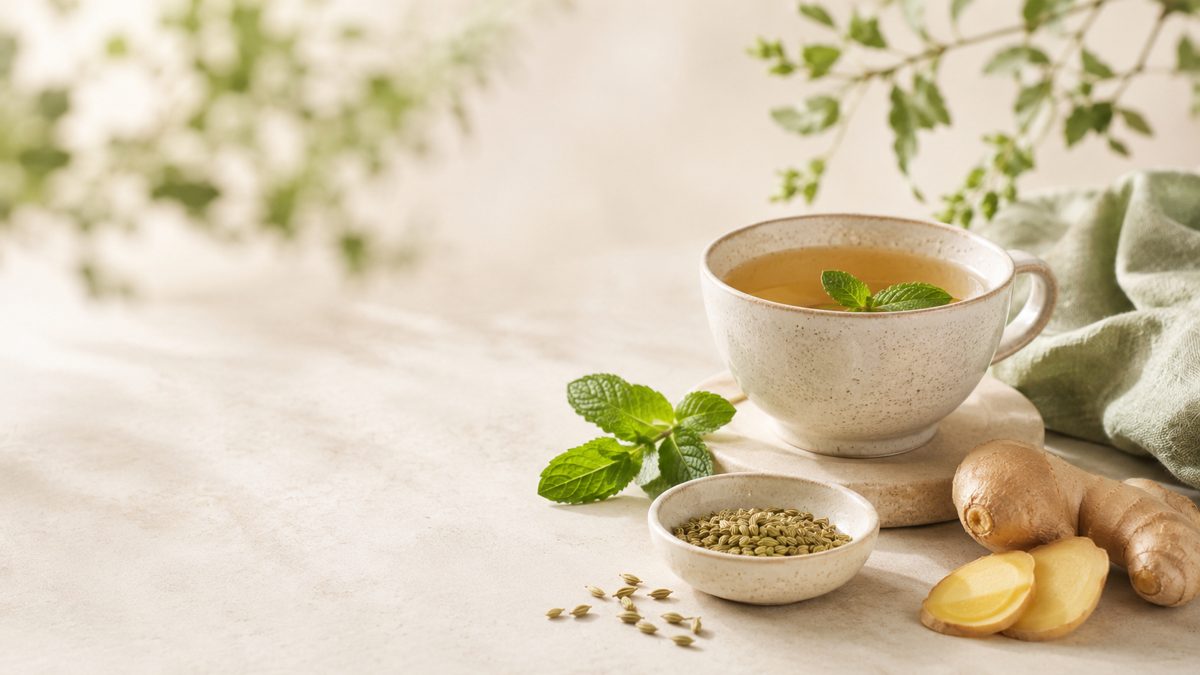
- Pour just-boiled water over a tea bag or 1 to 2 teaspoons of dried leaves, or a small handful of fresh leaves.
- Cover and steep for 5 to 10 minutes.
- Drink after meals, up to three or four cups a day.
Possible side effects and interactions
Peppermint oil capsules:
- Heartburn and reflux (less common with enteric-coated capsules)
- Nausea, dry mouth, belching
- A burning sensation around the anus, as some oil passes through
- Rarely, allergic reactions
Interactions:
- Antacids, H2 blockers and proton pump inhibitors (such as omeprazole) can make enteric-coated capsules dissolve too early
- Peppermint oil may affect the breakdown of ciclosporin and some other medicines processed by the liver
- Peppermint oil may reduce iron absorption when taken at the same time
Peppermint tea is very safe for most people in normal amounts.
Who should avoid it
- People with reflux, heartburn or a hiatus hernia
- People with gallstones or bile duct problems should check with a doctor before using peppermint oil
- Babies and young children: never apply peppermint oil or menthol near a child's face, because it can cause breathing problems. Do not give peppermint oil capsules to children without medical advice.
- Pregnancy: peppermint tea in normal amounts is generally considered fine. Avoid concentrated oil capsules unless your doctor agrees.
When to see a doctor
IBS should be diagnosed by a doctor, because other conditions can cause similar symptoms. See a doctor if:
- You have new bowel symptoms, especially if you are over 50
- There is blood in your stool, black stools, or bleeding from the bottom
- You have unexplained weight loss, fever or night sweats
- You have diarrhoea that wakes you at night
- You have a family history of bowel cancer, inflammatory bowel disease or coeliac disease
- You have difficulty swallowing, persistent vomiting, or indigestion with weight loss
- Pain is severe, constant or getting worse
Frequently asked questions
Is peppermint tea as good as peppermint oil capsules?
No. Capsules deliver a larger, consistent dose to the intestine. Tea is gentler and less studied, but some people still find it soothing.
Can I drink peppermint tea every day?
Yes, for most people, a few cups a day is fine. Stop if it causes heartburn.
Does peppermint help with bloating?
It may help bloating linked to IBS by easing gut spasm. Evidence for general bloating is limited.
Is spearmint the same as peppermint?
No. Spearmint contains much less menthol and has not been studied for IBS in the same way.
References
- National Center for Complementary and Integrative Health (NCCIH). Peppermint oil. https://www.nccih.nih.gov/health/peppermint-oil
- Lacy BE, et al. ACG Clinical Guideline: Management of Irritable Bowel Syndrome. American Journal of Gastroenterology, 2021.
- Alammar N, et al. The impact of peppermint oil on the irritable bowel syndrome: a meta-analysis of the pooled clinical data. BMC Complementary and Alternative Medicine, 2019.
- Weerts ZZRM, et al. Efficacy and safety of peppermint oil in a randomized, double-blind trial of patients with irritable bowel syndrome. Gastroenterology, 2020.