On this page
Quick answer
A spoonful of honey can make a cough from a cold less frequent and less disruptive, especially at night. It is one of the few home remedies recommended in official guidance: the UK's NICE guideline on acute cough suggests honey as a reasonable first step for adults and children over one year old.
Honey does not cure the infection or shorten how long the cold lasts. It is a way to feel more comfortable while your body clears the virus. And it must never be given to babies under 12 months old.
Why honey might help
Nobody is completely sure how honey works on a cough, but a few explanations are likely to play a part:
- Coating effect. Honey is thick and sticky. It coats the back of the throat, which may calm the irritated nerve endings that trigger the cough reflex.
- Sweet taste. Sweet tastes appear to dampen the cough reflex through shared nerve pathways, which may be part of why syrups of all kinds feel soothing.
- More saliva. Swallowing honey increases saliva and swallowing, which can reduce the tickle that sets off coughing.
- Antimicrobial and anti-inflammatory compounds. Honey contains substances that slow bacterial growth in the lab. This is interesting, but colds are caused by viruses, so it probably matters less for a typical cough.
What the research says
The best summary of the evidence in children is a Cochrane review, which pooled randomised trials of honey for acute cough. It found that honey probably relieves cough symptoms better than no treatment, a placebo or the antihistamine diphenhydramine, and may work about as well as dextromethorphan, a common cough-suppressing ingredient. Parents in these studies also reported better sleep, both for the child and for themselves.
For adults and children together, a 2021 systematic review in BMJ Evidence-Based Medicine looked at honey for upper respiratory tract infections. Honey improved overall symptom scores and cough frequency and severity compared with usual care. The authors noted that most studies were small and some were at risk of bias, so the size of the benefit is uncertain, but the direction was consistent.
Put simply, the evidence is moderate: good enough that health authorities recommend honey for self-care, but not strong enough to say exactly how much it helps or that it beats medicines.
How to use honey for a cough
There is no single proven dose. The amounts used in trials and suggested by health services are roughly:
- Children aged 1 to 5: half a teaspoon (about 2.5 ml)
- Children aged 6 to 11: one teaspoon (about 5 ml)
- Age 12 and over, including adults: two teaspoons (about 10 ml)
Practical tips:
- Take it before bed. Night-time coughing is where honey seems to help most. Give it up to 30 minutes before sleep.
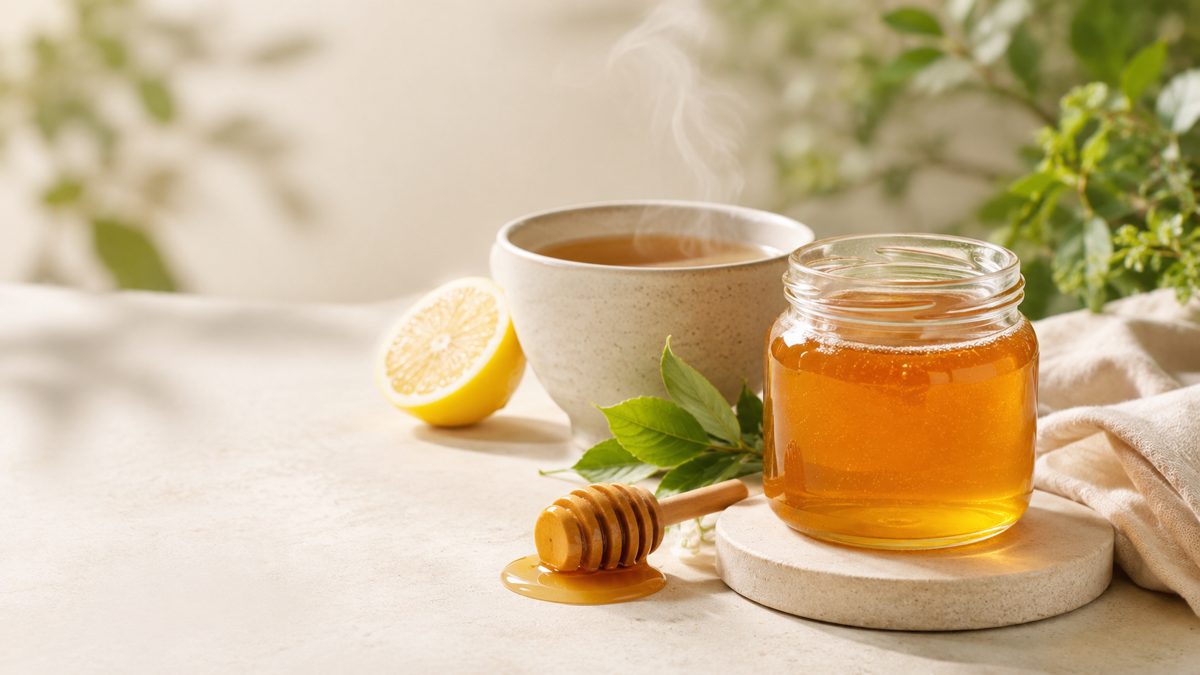
- Take it straight or in a warm drink. A spoon on its own gives the best coating. You can also stir it into warm water with lemon, or into warm (not boiling) herbal tea.
- Repeat as needed during the day, but keep an eye on the total amount of sugar, especially for children.
- Brush teeth afterwards. This is the step dentists would underline. Honey is mostly sugar and sticks to teeth. A bedtime dose followed by sleep without brushing is a recipe for tooth decay, particularly in children. If brushing after the dose is not practical, at least have the child drink some water.
Any type of honey seems to work. Some studies used dark honeys such as buckwheat, and manuka honey is often marketed for its antibacterial properties, but there is no good evidence that expensive honeys work better for a cough than ordinary honey.
Possible side effects and interactions
For most people over one year old, honey is very safe in the amounts above. Things to keep in mind:
- Tooth decay, as described above.
- Blood sugar. People with diabetes can usually use a small amount, but it counts as sugar. Check your levels as usual and talk to your diabetes team if you are unsure.
- Allergy. Rarely, people react to pollen or bee proteins in honey. Avoid it if you have had a reaction to honey or bee products before.
- Calories. Several spoonfuls a day for a week adds up, which matters for people managing their weight.
Honey has no important interactions with medicines in normal food amounts.
Who should avoid it
- Babies under 12 months old (never give honey)
- Anyone with a known allergy to honey, pollen or bee products
- People with diabetes should use it cautiously and count it in their carbohydrate intake
When to see a doctor
Most coughs from a cold settle within three weeks. Honey is for that kind of cough. See a doctor or seek urgent care if:
- The cough lasts more than three weeks
- You or your child is struggling to breathe, breathing very fast, or the skin between the ribs pulls in with each breath
- There is chest pain, or you are coughing up blood
- There is a high fever, or a fever in a baby under three months old
- The cough comes in bouts with a "whoop", vomiting, or turning red or blue, which can be a sign of whooping cough
- You have lost weight without trying, have night sweats, or have a long-term lung or heart condition and your symptoms are getting worse
- A child seems unusually drowsy, floppy or is not drinking
Get emergency help straight away for severe breathing difficulty, blue lips or confusion.
Frequently asked questions
Is honey better than cough syrup?
For children, studies suggest honey works at least as well as some common over-the-counter cough ingredients. Many cough medicines are not recommended for young children anyway, so honey is a sensible first choice for children over one year old.
Can I mix honey with lemon or ginger?
Yes. Warm water with honey and lemon is a comforting drink and adds fluid, which helps when you are unwell. Just keep the water warm rather than boiling.
Does honey work for a dry cough or a chesty cough?
Studies mostly included coughs caused by colds and other short-term infections, which can be dry or chesty. Honey eases the urge to cough rather than treating the cause, so it can help with both.
How long can I keep using honey for a cough?
It is fine to use for the length of a normal cold. If you still need it after three weeks, the cough itself needs checking by a doctor.
References
- National Institute for Health and Care Excellence (NICE). Cough (acute): antimicrobial prescribing, guideline NG120, 2019. https://www.nice.org.uk/guidance/ng120
- Oduwole O, Udoh EE, Oyo-Ita A, Meremikwu MM. Honey for acute cough in children. Cochrane Database of Systematic Reviews, 2018.
- Abuelgasim H, Albury C, Lee J. Effectiveness of honey for symptomatic relief in upper respiratory tract infections: a systematic review and meta-analysis. BMJ Evidence-Based Medicine, 2021.
- Paul IM, et al. Effect of honey, dextromethorphan, and no treatment on nocturnal cough and sleep quality for coughing children and their parents. Archives of Pediatrics & Adolescent Medicine, 2007.
- US Centers for Disease Control and Prevention. Botulism: infant botulism. https://www.cdc.gov/botulism/